Showing posts with label Bolivia. Show all posts

Thursday, March 23, 2006

Day 53-56 - Lago Titicaca (Bolivia and Peru)


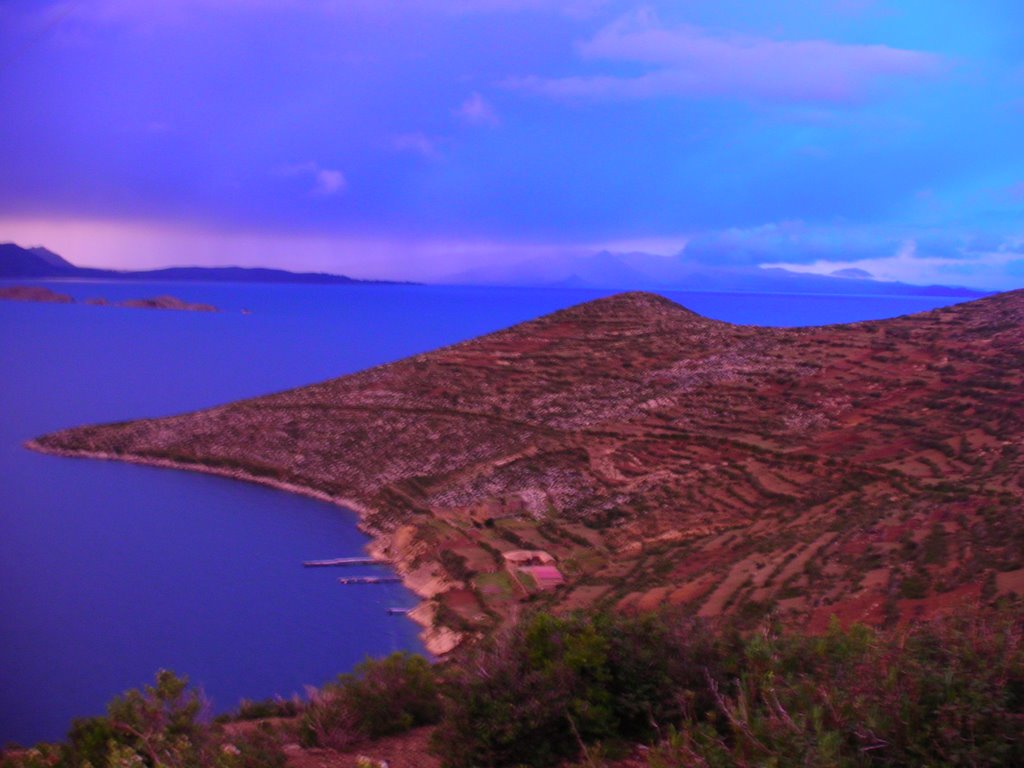
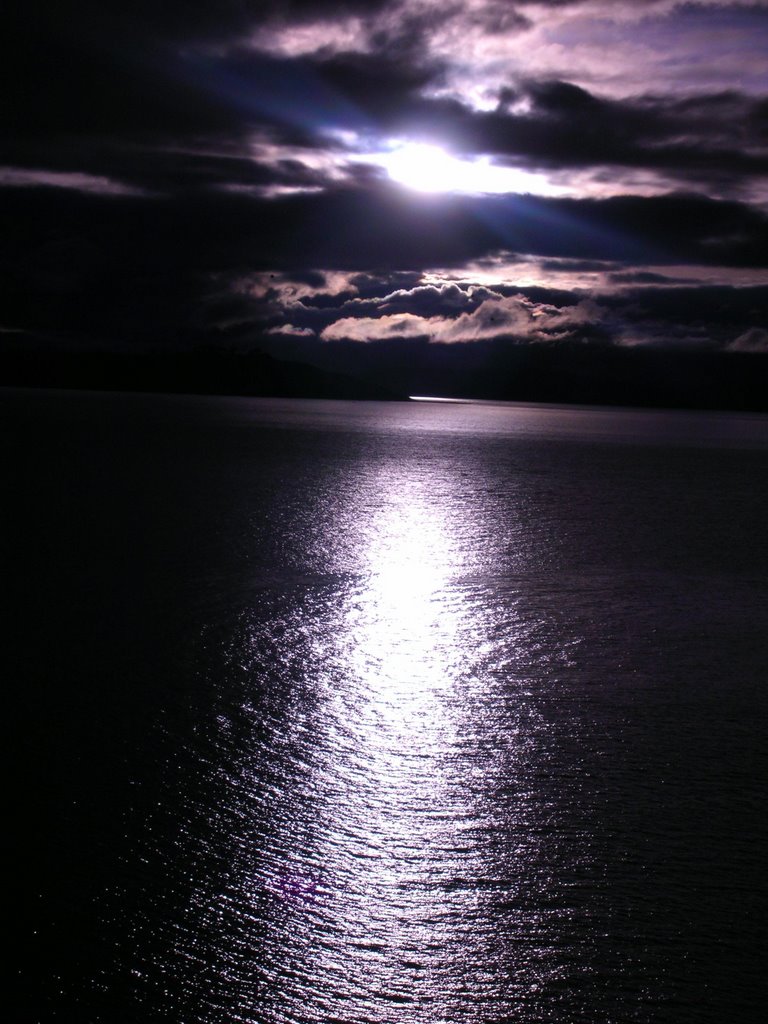
Lago Titicaca (Rock of the Puma Lake) is the world´s highest navigable lake. After a day exploring Copacobana (the one that doesn´t have a song about it) on the Bolivian shore of Lago Titicaca, Regina and I headed for an overnighter on Isla del Sol. Isla del Sol is considered the birthplace of Incan culture and is named Island of the Sun because the Incans believe that it is the birthplace of the sun. It is not hard to imagine why when you see the sunrise. The sun looks as if it is rising directly out of the water in the middle of the lake.

After watching the sunrise, we headed back to the mainland to catch a bus to Puno, Peru. This border crossing did not involve nearly as much culture shock as the last one. Peru, thus far, seems very similar to Bolivia.

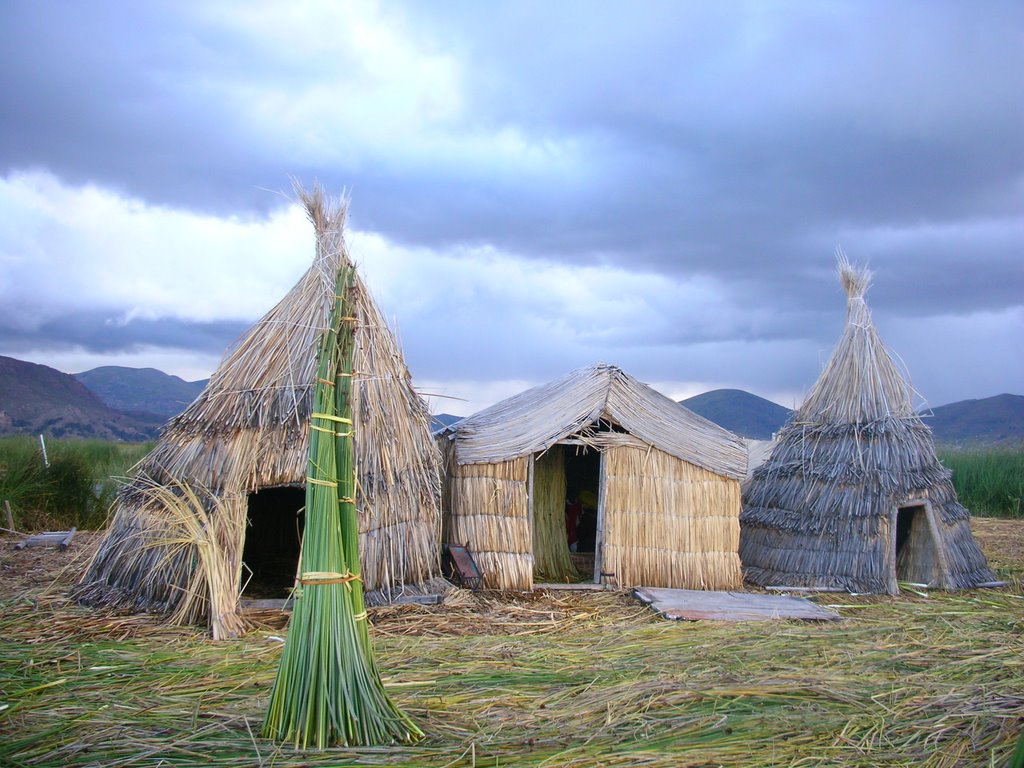
From Puno, we visited the Isla Flotantes, a series of man-made floating islands. The island is formed by weaving layers of reeds on top of each other. These islands have been around since 1000 A.D. As one layer begins to deteriorate, the residents add another layer. The islands are held in place by poles, which are removed during the rainy season so that the inhabitants can row the island to a more shallow part of the lake. I have never seen anything like it! The ground, huts, roofs, and knick-knacks are all made of these reeds. Our guide told us that the people even eat part of the reeds for breakfast. I tried some . . . kinda tasteless.

Monday, March 20, 2006

Day 51 - Somewhere in the Amazon Basin (Day 3)


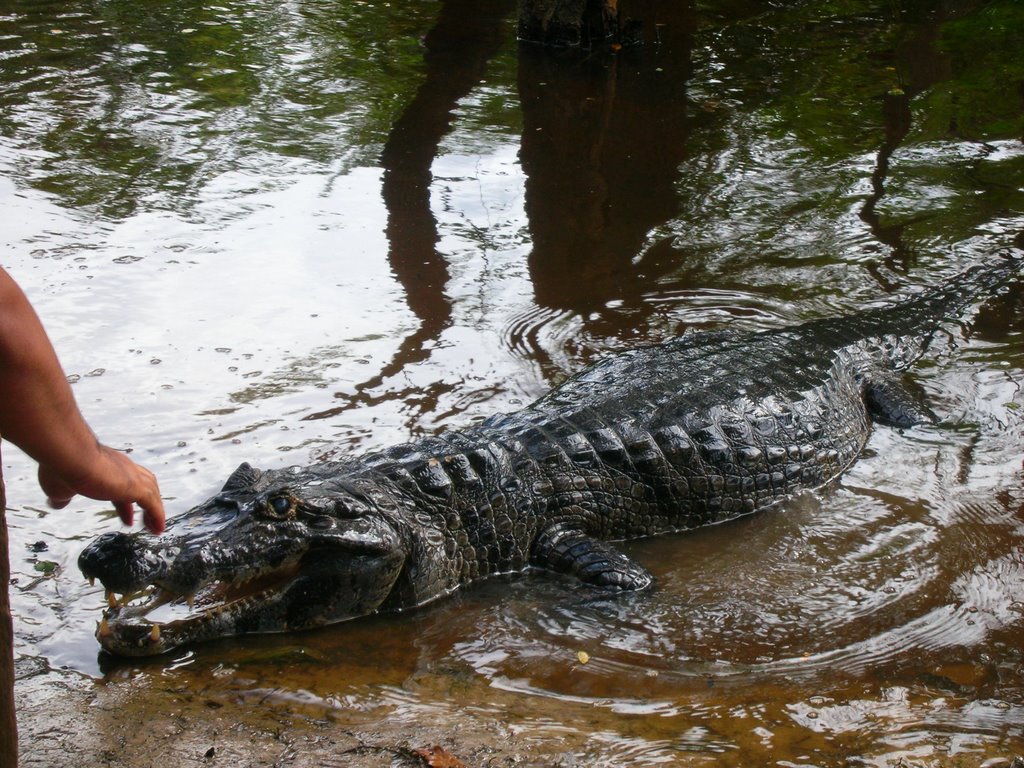
As if we weren´t afraid enough of running into one of the two other alligators, during our last night in the Pampas, yet another alligator decided our camp was the happening place to be.

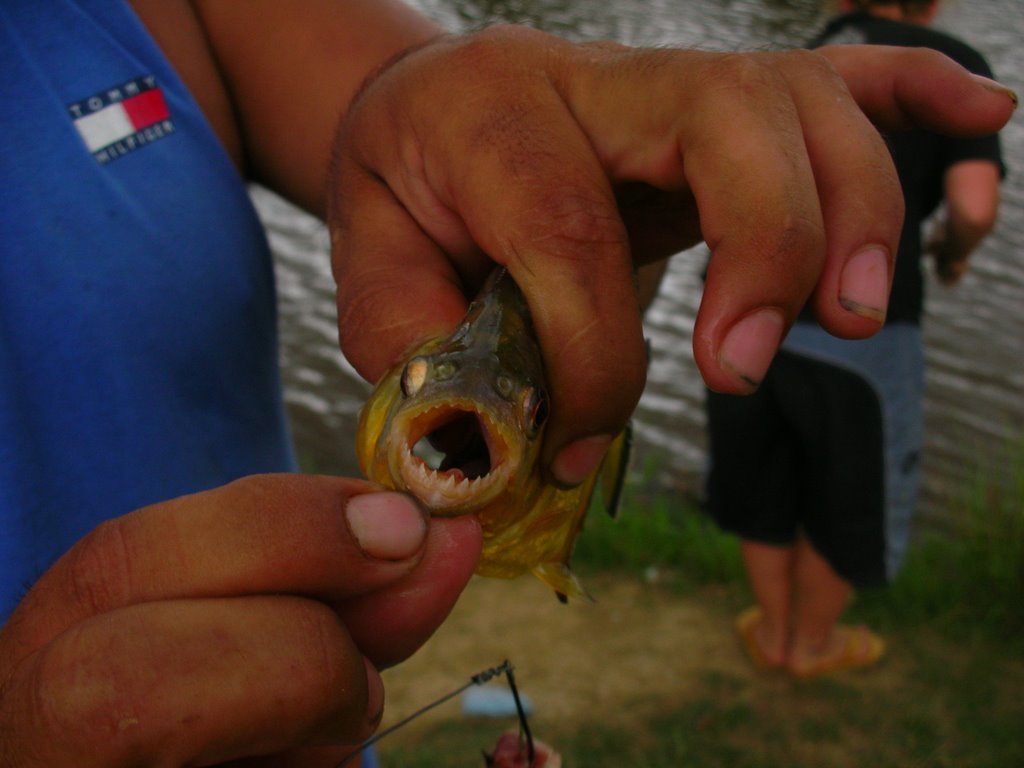
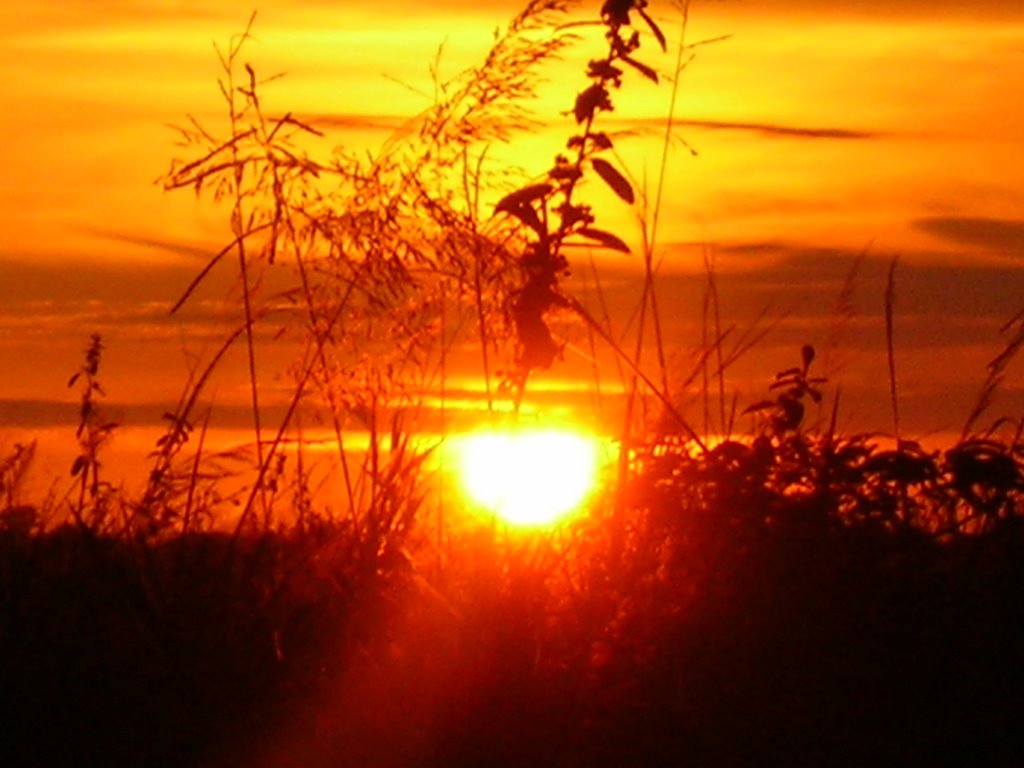
It was another early morning. We went to watch the sunrise over the Pampas. It was beautiful. The sun was a coral orange color. For the rest of the day, we went to feed more monkeys, swam with more dolphins, and went fishing for pirana. I actually caught a pirana too!

Day 50 - Somewhere in the Amazon Basin (Day 2)


It was a good thing that we went to bed early last night because we were scared out of bed pre-dawn by terrifying roars and a series of loud crashing sounds. I tried going back to sleep and was dreaming that we were going to war when someone said that the sound was howler monkeys. When we got outside of the cabin, we realized the crashing was the sound of them throwing pods off of the trees and monkey poo at our cabin.

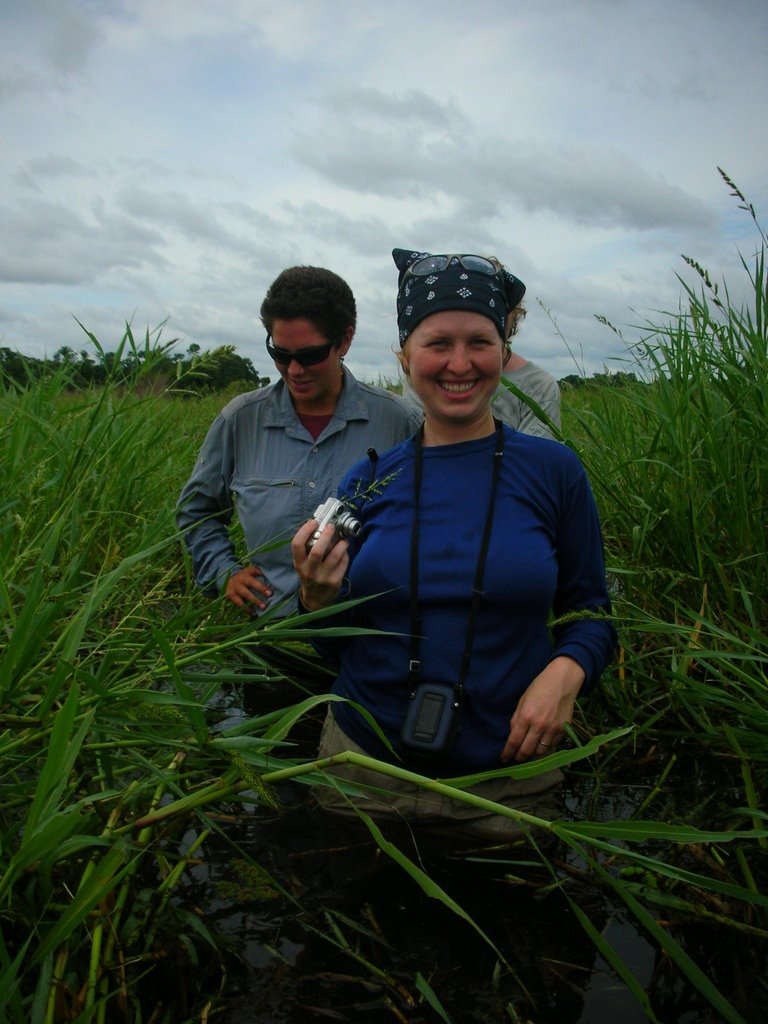
After breakfast, we put on long pants, long shirts, and knee-high boots to go Anaconda hunting. Unfortunately, the knee-high boots did little to protect us from the waist-deep water. After tromping through the mud and water for an hour, we walked around an island looking to see if there were any anacandas sunning on the tree branches. Still no luck. After another hour tromping through mud and weeds, we headed back to the boat.

I was a little disappointed, but more relieved. . . well at least until I stepped on an anaconda in the water. I screamed like only a girl can. By the time my guide realized what was going on the snake has slithered away. When I was obviously shaken, the guide´s assistant, Doya, asked me, ¨Didn´t you want to see an anaconda?¨ A legitimate question during an anaconda-hunting expedition. My response was, ¨Yeah, I wanted to see an anaconda. I wanted the guide to see an anaconda and point it out to me so I could take a picture and say I´ve seen an anaconda. I didn´t want to step on an anaconda.¨

When we got back from the hunting trip, we realized that yet another alligator had decided to camp with us and that his favorite spot for sunning was directly beneath the walkway that leads to our cabin door.

After lunch, we put on our swimsuits and went searching for good swimming spots. It wasn´t the first time on the trip that we had seen the pink river dolphins, but it was the first time that we were permitted to swim with them. I know it sounds like something straight out of a science fiction novel, but the dolphins really are pink. Not a crayola pink, but more of a salmon pink.

It was really great swimming with them. At first the dolphins were shy and kept their distance. But while the group was being loud and distracted showing off for each other, Regina and I swam away from them. Suddenly there were dolphins surfacing all around us. We exchanged smiles, knowing that we had the dolphins to ourselves.

Day 48-49 - Rurrenbaque and Somewhere in the Amazon Basin


This is another destination that wasn´t even on my radar when I was planning my trip. After hearing about the pink dolphins, though, I had to go to Rurrenbaque. Like most adventures in Bolivia, I am learning, it was not without its hassles, but completely worth it.

The flight to Rurrenbaque, which was not easy to find, was on a tiny nineteen-passenger plane. Everyone got a window seat because there were no aisle seats. The scenery, or at least what we could see of it out of the dirty windows, was amazing. We landed in a valley surrounded by dense jungle mountains. It was HOT and HUMID!

I was lucky to meet up with people that I had met on the Salares trip, Ben and Dustin, and some girls that they were traveling with, Regina, Lauren, and Julie. We arranged a three-day tour into the Pampas with Fluvial Tours. Despite the repeated dishonesty of the agency and our tour guide, we managed to have a fantastic adventure.

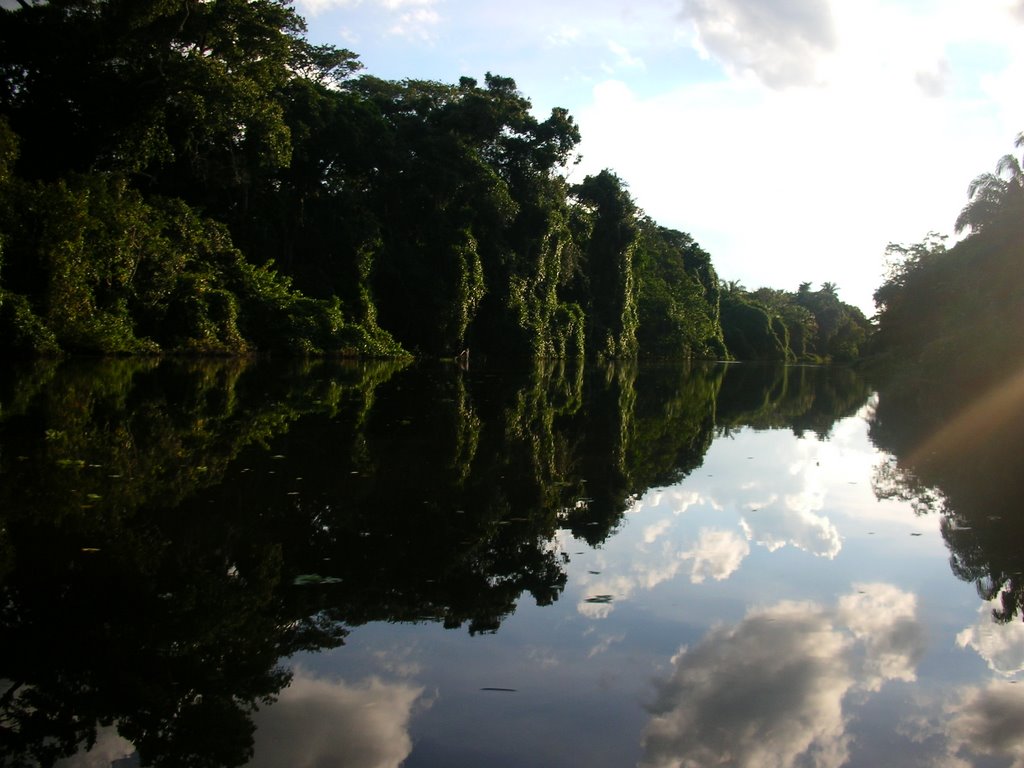
Our first day started with a two-hour drive to the put-in. By the time we reached it, we had already seen a couple of caymen (sp?), a tree sloth, and an anteater. Then, on the way to our camp from the put-in, we saw Capibaras, giant water rats that look like beavers without the paddle tails, and a variety of colorful birds. At camp, we were greeted by Jorge Luis, our cook, and his ¨friend,¨a blind alligator that lives in front of the camp. It's like living in a zoo!

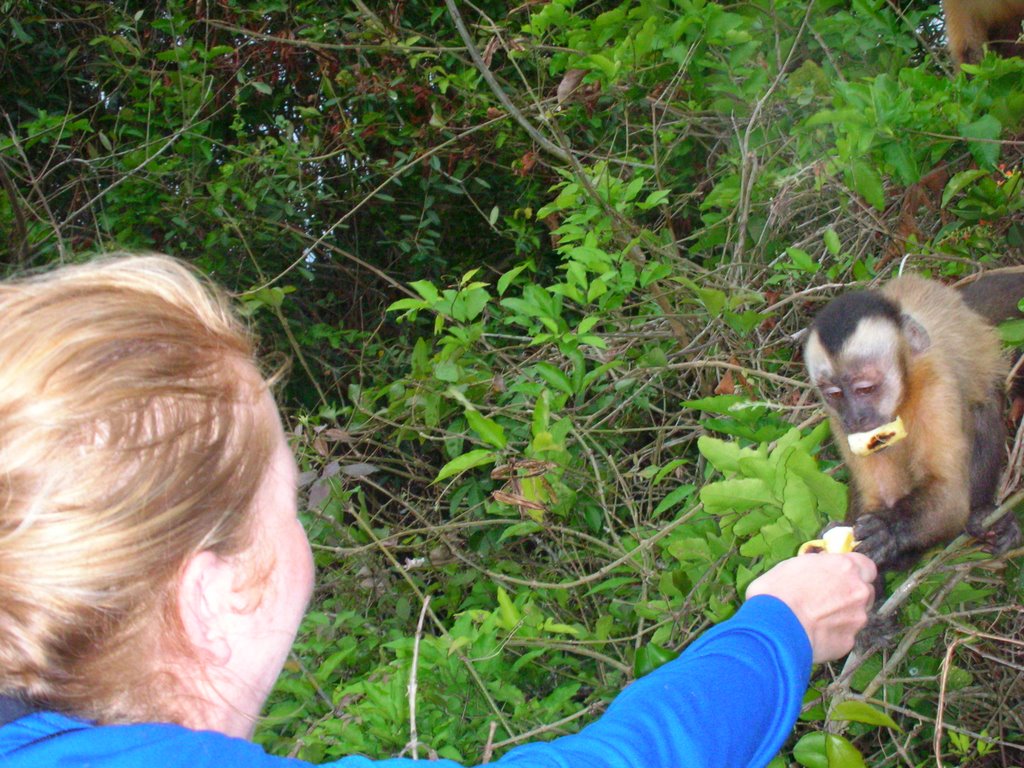
After lunch, we relaxed in the hammocks before taking a boat ride to watch the sunset. On the way to the Sunset Bar, a man in a shack that has a cooler with really expensive beer, we saw the cutest chichilla monkeys and we got to feed them bananas. After the sunset, we did a short walk to look at alligator eyes, which shine red at night when a light is flashed in them. I was preoccupied, however, by the fact that I had been stung by yet another bee.

After dinner, we escaped to our mosquito nets.

Day 46-47 - La Paz - Valle de La Luna


I know I shouldn´t admit it, but the first thing I did when I got to La Paz was go shopping. After six weeks, I just couldn´t take it anymore and had to buy a pair (actually two pairs) of blue jeans. It´s amazing how a good pair of jeans can instantly make you feel more confident. =)

La Paz has some very interesting shopping. There are two shopping areas that are particularly popular: the mercado negro, which literally means black market, and the mercado de hechiceria or the witch´s market. The first one is not really a black market, but is, instead, a couple blocks of boothes selling American knockoffs, fruit, and every imaginable household item. The witch´s market, though, sells some really strange things. I bought a couple of amulets for good luck, fortune, love, etc., but I stayed clear from the llama fetus skeletons and stuffed frogs.

That night I met up with Pauline, the cute German girl who was on the Salar trip with me. We wanted to check out La Paz´s nightlife, but ended up in a gringo bar where a twenty-year-old Canadian tried to pick us up by using lines like, ¨I think it´s really sexy when girls play with candle wax.¨ =) I bet that he´s a real hit with the ladies.

The next day I took a day trip to the Mallasa Zoo and Valle de La Luna. The zoo was probably the best I have ever seen. Zoos usually make me sad, but this zoo had surprisingly good habitats for their animals. I got there around feeding time, so the animals were active. It wasn´t the same as seeing the animals in the wild, but it was still pretty neat, and I´m sure much safer, to see jaguara, puma, and condors so close.

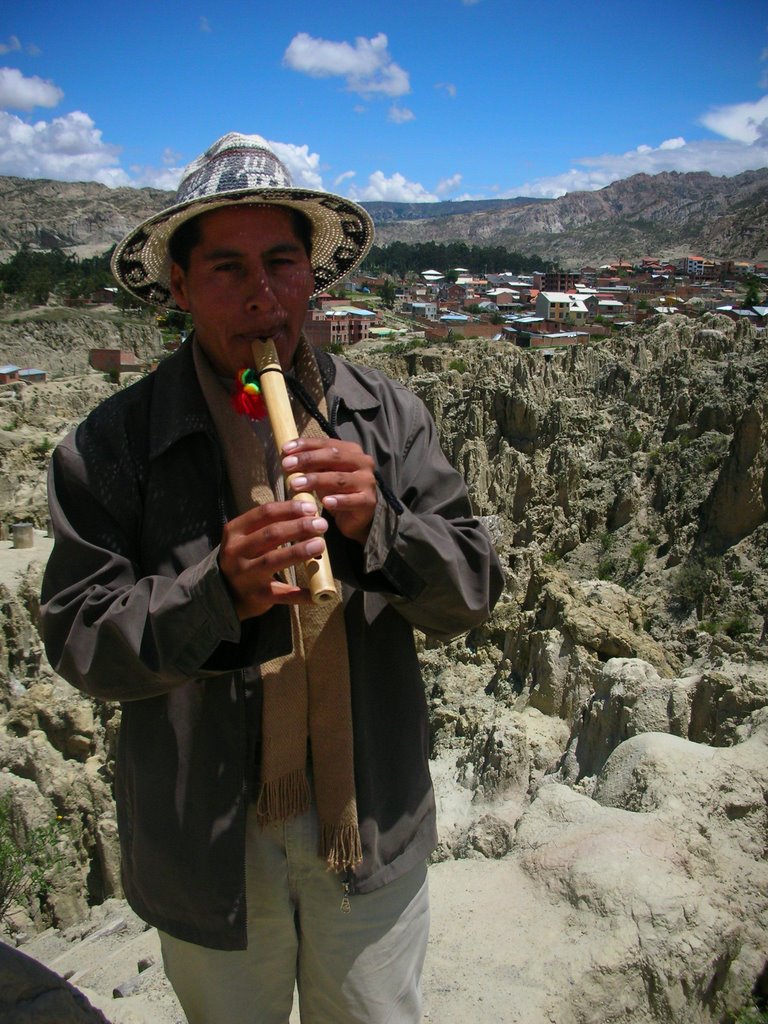
At Valle de la Luna (¨Valley of the Moon¨), named such because the strange pillars that make up the valley look like those found on the moon, I was guided by the very amiable Lino. He is from the Amayra tribe and knew all about the area. During the tour, he played his flute for me and told me about all the medicinal and halluginegic properties of all the plants.

Monday, March 13, 2006

Day 42-44 - Potosi


Well, I guess I was too quick to judge Bolivia. Since I left Uyuni, a trash heap, I have found that there are plenty of paved roads and the women that wear traditional dress are found mainly in the rural areas. Potosi, the world´s highest city, was once one of the world´s richest cities. This is apparent from the abundance of beautiful and ornate buildings scattered throughout the city.

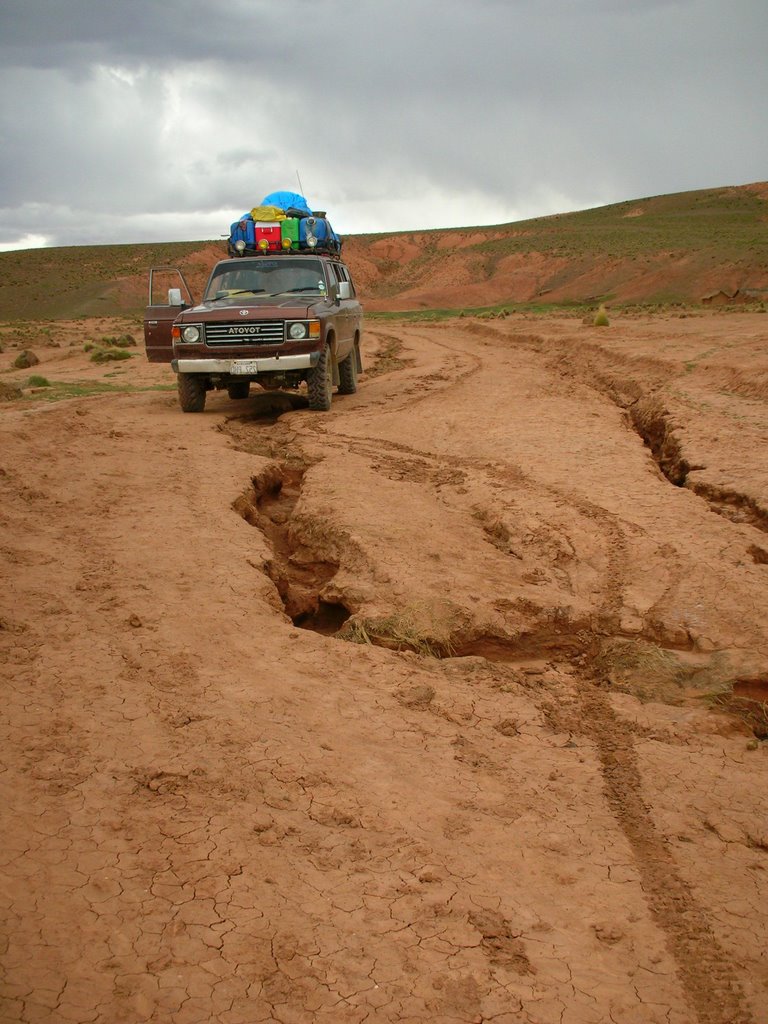
If you had asked me on the day I arrived in Potosi, I would have said the most dangerous part of the city was getting there. The night before I left Uyuni there was a big storm. Thus, on the drive from Uyuni, much of the road and many of the bridges were covered in mud or water. At one point our bus came upon an area where there were a bus, a work truck, and an adventure vehicle all up to their axles in mud. The driver made all the passengers get off the bus so that he could make a run at it. As the passengers crossed the muddy ¨river¨ on foot, the bus driver stepped on the gas. It was like a scene out of ¨Speed,¨ the bus was careening and honking, as passengers dove out of its way.

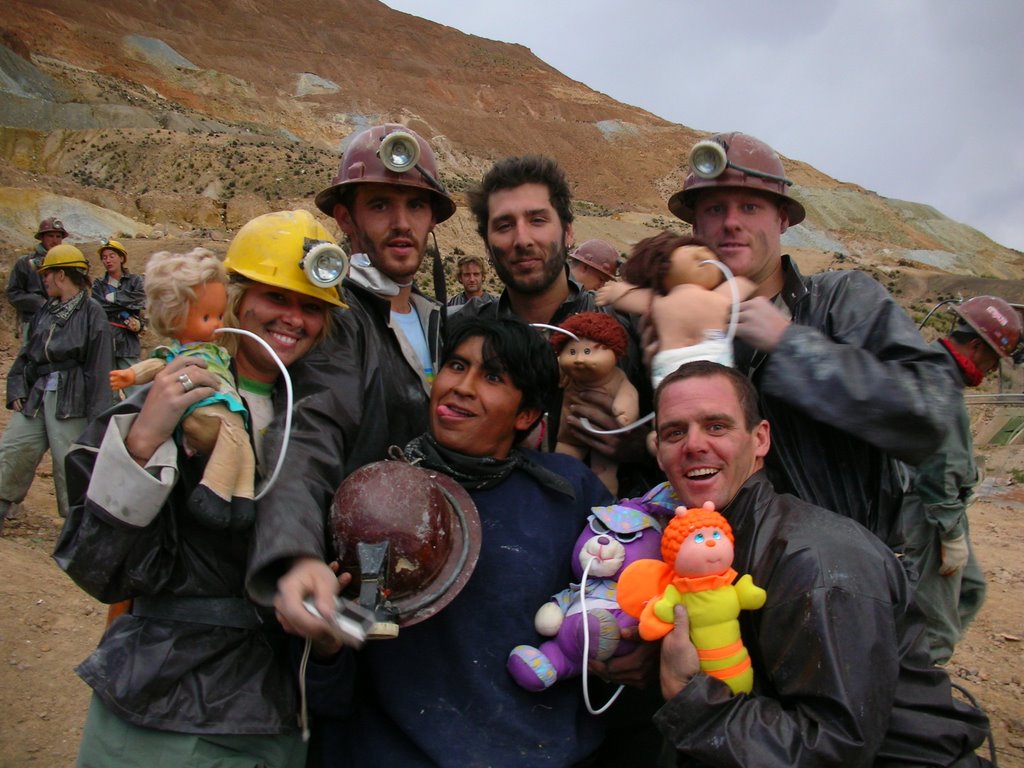
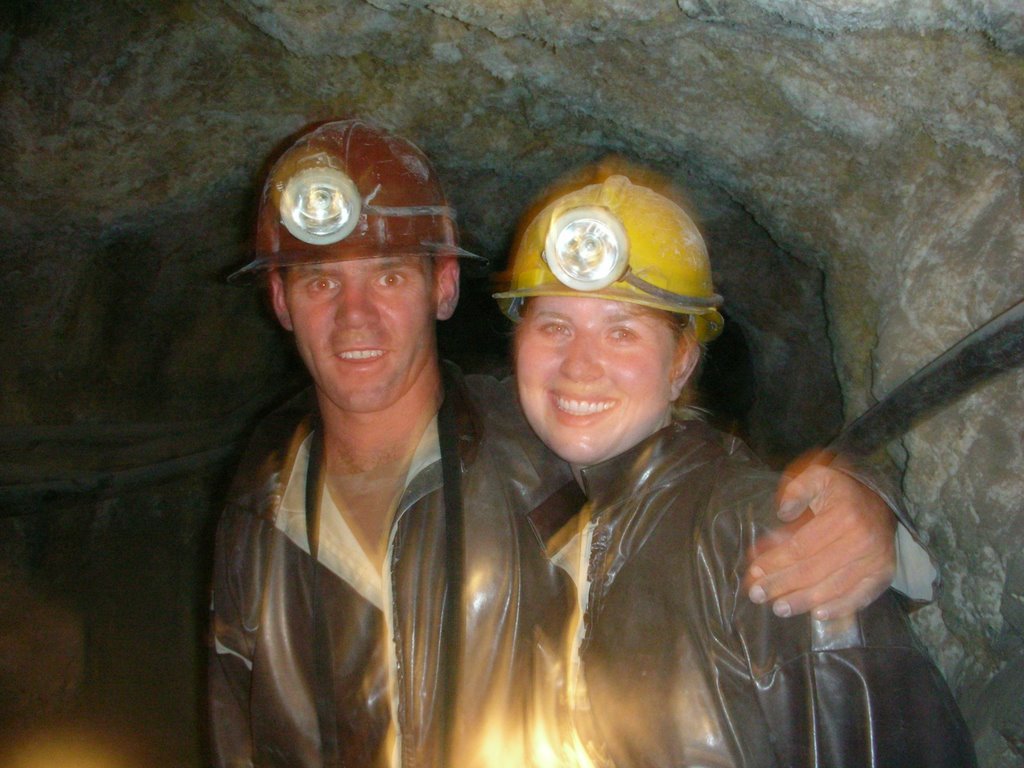
As crazy as that drive was, the most dangerous part of the city is its most common job: working in the mines. Not knowing what I was getting myself into, I signed up for a tour of the mines, which consisted of getting dressed in sexy safety gear (see above); going to the miner´s market to buy dynamite, coca leaves, toys, and 96% alcohol as gifts for the miners; and spending three hours walking to all levels of the mine. With the tight spaces, stifling air, and massive amounts of dust in the air, this tour is not for the fainthearted. At times we were hunched over, wading through calf-deep water, or crawling on our forearms. On the second level, our guide chose to tell us that the life expectancy of a miner is 45 years and that cave-ins are the most frequent cause of death. Very reassuring!

During the last five minutes of the tour, the guide appointed one of our group members, Rosco, to lead us out of the mine while the tour guide took a different route. Despite the fact that we followed the guide´s directions, we were more than a little panicked when we had to pass through a tunnel on our belly only to find logs piled up at the end. Just as we were about to turn around, we heard voices from above. It turns out that you have to climb the logs to get back to the first level.

I will never again be able to hear the phrase ¨the light at the end of the tunnel¨and not associate it with the wave of relief that swept over me when I saw daylight at the end of the mine. I was exhausted, I realized when I exited the cave, not because we had been working hard, but because I had been terrified most of the time we were inside. It´s strange that with all the crazy things I´ve done to get a rush--bungee jumping, parasailing, base jumping--this mine tour was the thing that scared me the most. Maybe because it was not a controlled risk. And, what is even scarier, is that it is a job that many Bolivians do every day despite the high rate of accidents, lack of proper safety requirements, and low life expectancy. These miners make, on average, only $100 every two weeks. According to a survey posted inside the mine´s museum, 90% of the miners do it because there are no other jobs.

After leaving the mines, the miners and our guides showed us how to properly ignite dynamite. We gutted the dolls we had bought at the miner´s market (our group´s doll was a glow worm), stuffed is with dynamite, and strung the wick through its mouth (see above). We lit eight of the "toys" at once. What a blast!

Later that night, one of the guides came out with a group of us staying at the Koala Den. He took us to a local bar, Karoake Fantasy. It was pretty amusing. The videos (and words) didn´t always match the song. We had a lively group though and managed to belt out ¨Dust in the Wind¨to the tune of ¨What´s Love Got to do with It?¨ Not an easy task.
Friday, March 10, 2006

Day 41 - Somewhere in Bolivia to Salar de Uyuni


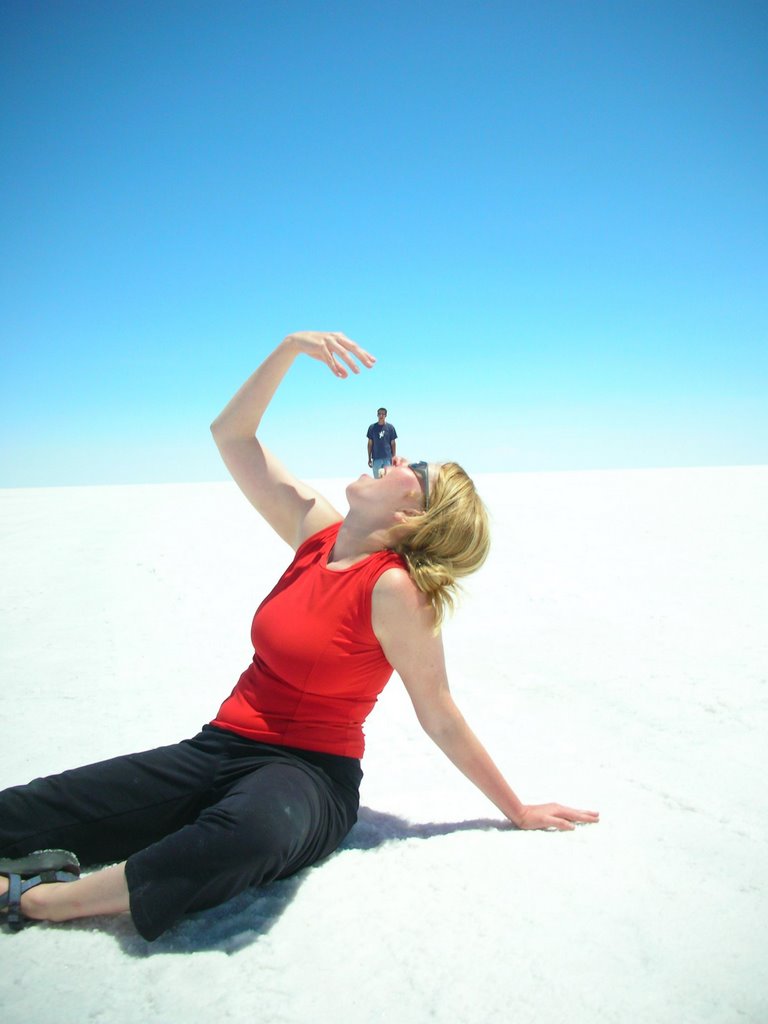
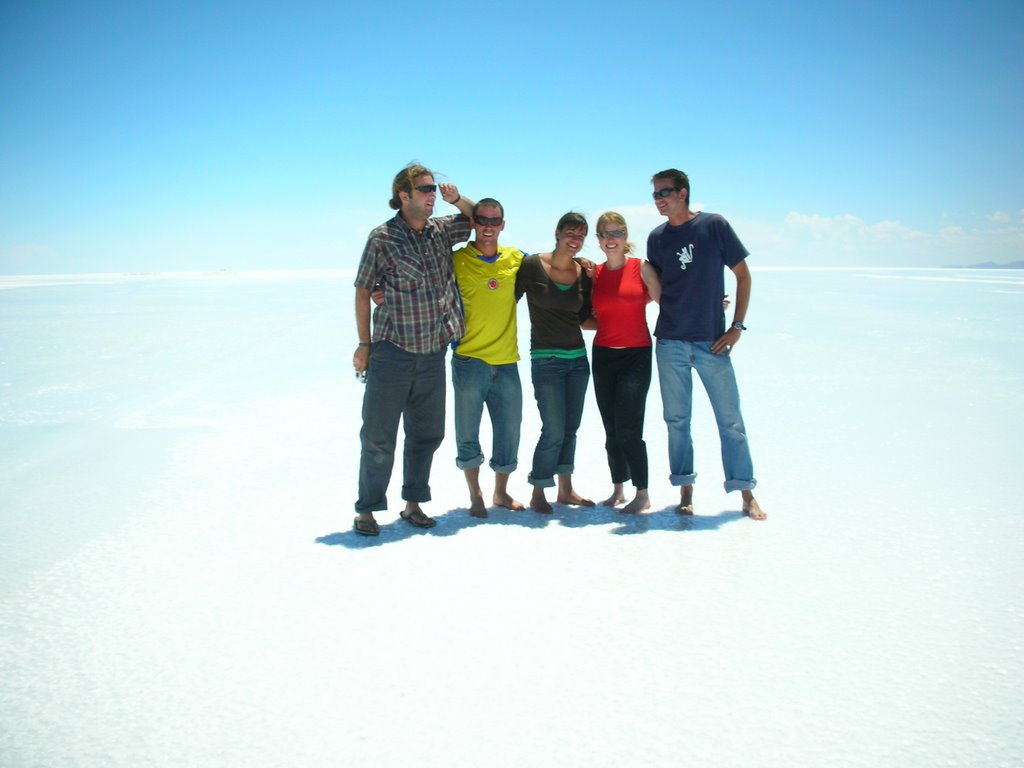
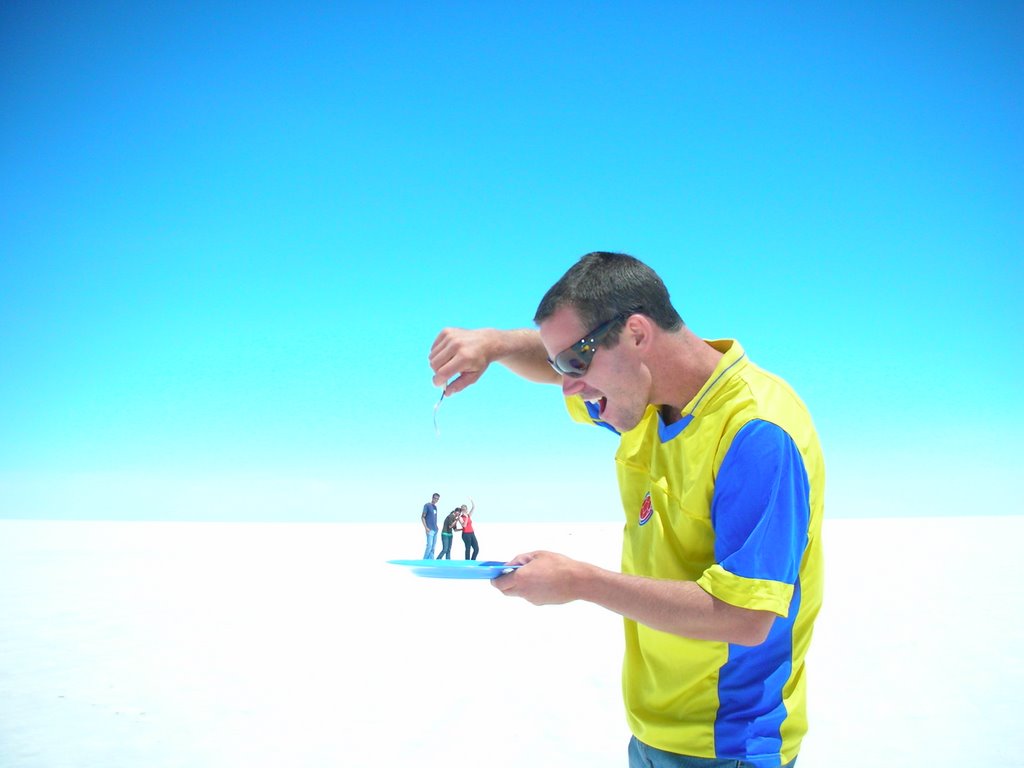
Today, the moment we had all been waiting for, the Salares de Uyuni, the world´s largest salt flat. After spending the last five weeks visiting places famous for what they have, it was different to visit a place for what it doesn´t have. The salt flats are just an endless expanse of whiteness. We took advantage of this two-dimensional landscape to take some very interesting photos. What can I say? We were really hungry =)

We also visited a hotel made completely out of salt, beds and all, and the train cemetary, where it looks like trains stopped in their tracks in the middles of the desert and began to rust.

If any of you are interested in seeing more pictures than the ones I have posted, please email me. I have a lot of really great photos, but not enough time or space to put them all on the blog.

Day 40 - Somewhere in Bolivia (Day 3)


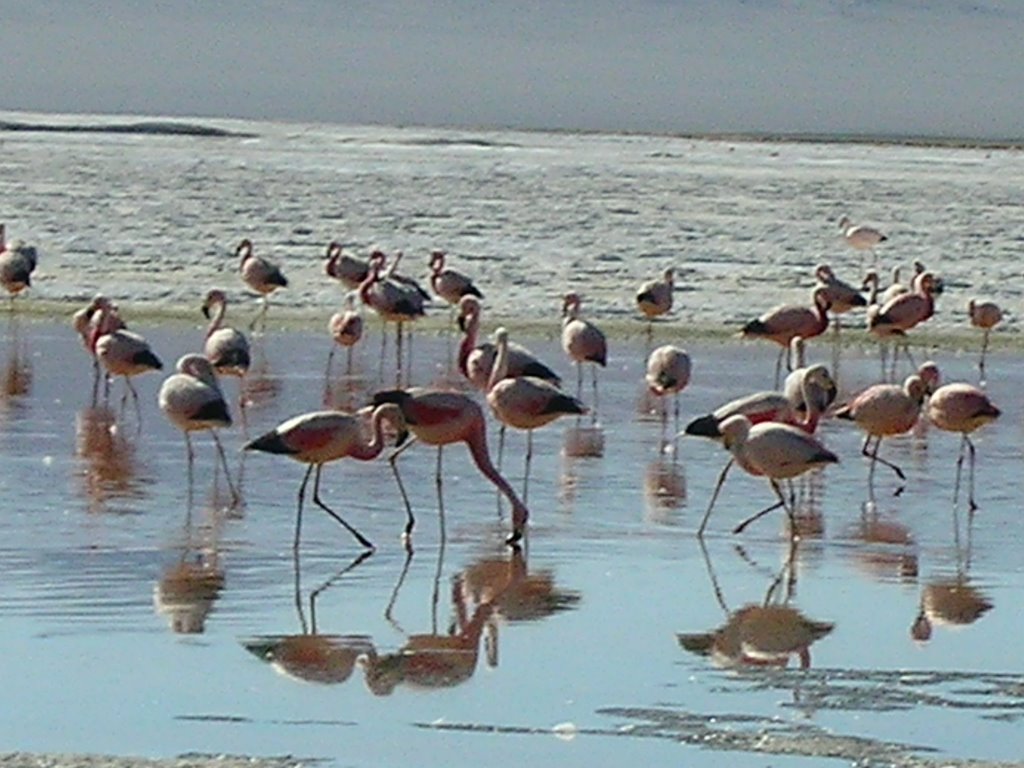
Today began at Laguna Colorado. The minerals in the lake make the water a maroon red color. The laguna is also a popular gathering place for flamingos. Although I had seen flamingos before, probably in a zoo, I had never seen them fly. They are surprisingly graceful despite their long necks and legs.

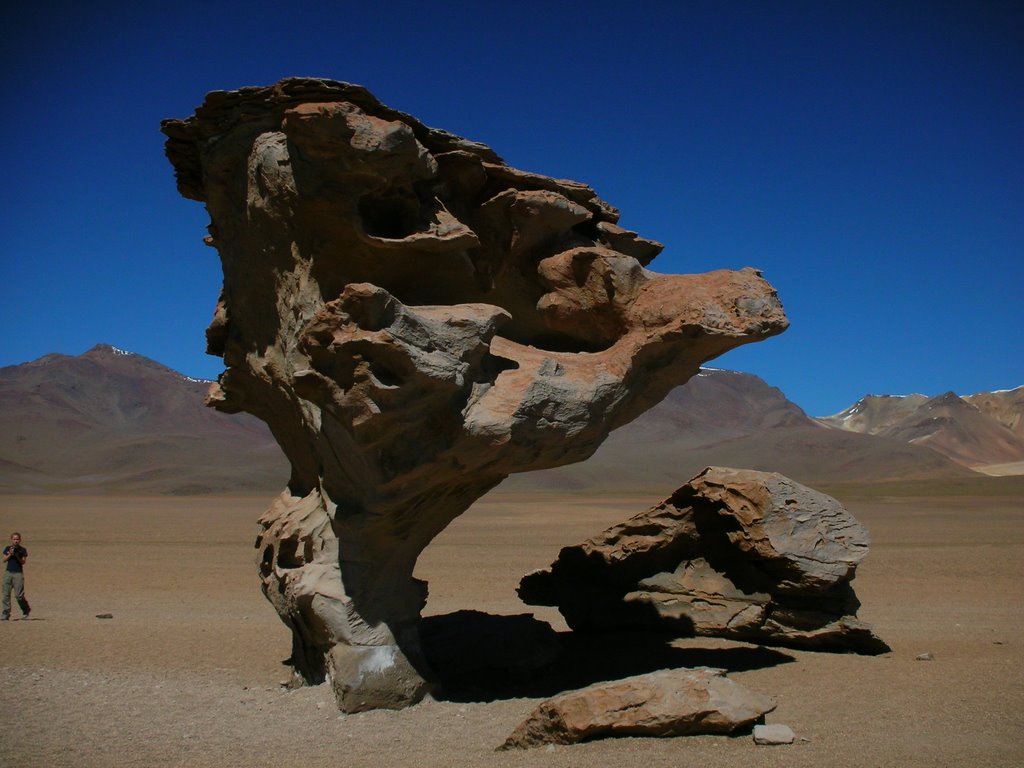
We also visited the Arbol de Piedra (Tree of Rock) and other rock formations in the Desierto de Dali. It was surreal, as if Dali himself had painted the landscape and sculpted the rocks. It was just missing the melting clocks.

Day 39 - Somewhere in Bolivia (Day 2)


The second day started in a ghost town and ended in a natural hot springs. The ghost town was really impressive. It was huge, covering a whole valley. It had large block structures that were still intact. In a lot of ways, it looked more modern than some of the inhabited towns we had driven past. The guide explained that the inhabitants had been driven out during the Spanish conquests and that when they tried to return, they could no longer survive at such a high altitude.

We also stopped at several lagunas. The most famous of these was Laguna Verde, which has green water and forms the base of the active volcano Licanbur. By far, the highlight of the day, though, was the hot springs. It had been cold and windy most of the day and our ¨basic¨accomodations the night before had not included a shower. It was perfect timing too. The sun was just setting so the water was reflecting pink and purple. I could have spent the whole night there.

Day 38 - Somewhere in Boliva


Today was the first day of a four-day jeep tour of Southern Bolivia. I was wondering what I had gotten myself into when the seven of us--Edgar, the guide; Celia, the cook; Rob, Rosco, Mike, Polly, and I--piled into a landcruiser and Celia began to play her Roxette CD. It didn´t help, either, that the landcruiser overheated before we made it to our first stop. The ¨roads,¨ in the loosest sense of the word, were partially or completely washed out by the rain in some places. On more than one occasion, we had to drive through places where the river crossed the road or to pull up brush to put over the deep mud so that the landcruiser didn´t get stuck. But the trip turned out to be a very adventurous and an eye-opening experience.

Our first day was mostly driving. It was so beautiful and colorful. It´s strange, but even the sky seems bluer here. Maybe it is because we are so much closer to it; during the course of the trip we climbed to an elevation of over 5,000 meters. Also, the mountains are red, green, blue, and mustard colored. On some of the mountains, these colors are folded together in such a way that you wonder what happened to make them that way.

We only had two real stops. First, the Sillars, which are giant red rock formations. Unlike the formations in Cafayate, however, we followed the mountains up over them and had an amazing view of them from the top. The second stop was lunch in a field full of llamas. It was a bit disturbing, though, that our lunch consisted of tamales made with llama meat.

We also drove through several small towns. It was strange to see children dressed in knock-off American clothes (Boss and Fox are really popular) come running out of the mud buildings with straw roofs. The children are running and waving as if you are celebrities, but then scatter as soon as you whip out your camera. Our guide explained that they still believe that people can steal their souls with cameras.

Day 37 - Tupiza, Bolivia


It is hard to believe that Bolivia and Argentina share a border. They couldn´t be more different. In Argentina, the people look very European because of the influx of Italian and Spanish immigrants, the cities are well-developed, and the people all dress in the latest style modern.

In Bolivia, the people are very short (even I feel like a giant) and look more like their ïndian¨ancestors: dark skin, dark watery eyes, and black hair. The older generation and people in smaller pueblos still wear their traditional dress. For the women, this consists of a bowling hat (it looks like a shrunken derby hat); a colorful, pleated skirt, and a multi-colored shawl wrapped around the shoulders to carry babies or other items. The function of the shawl is obvious. And, as I found out on my bus ride from Uyuni to Potosi, the skirt makes it easier for the women to go to the bathroom wherever they are, whether it be on the side of the road or in the fields. I still cannot figure out the hat though. It is too small to provide any protection from the sun.

I have only been to three cities so far (Tupiza, Uyuni, and Potosi), but I have yet to see a paved street. Many of the houses here are made of mud bricks or adobe and covered with a straw or corrugated metal roof.

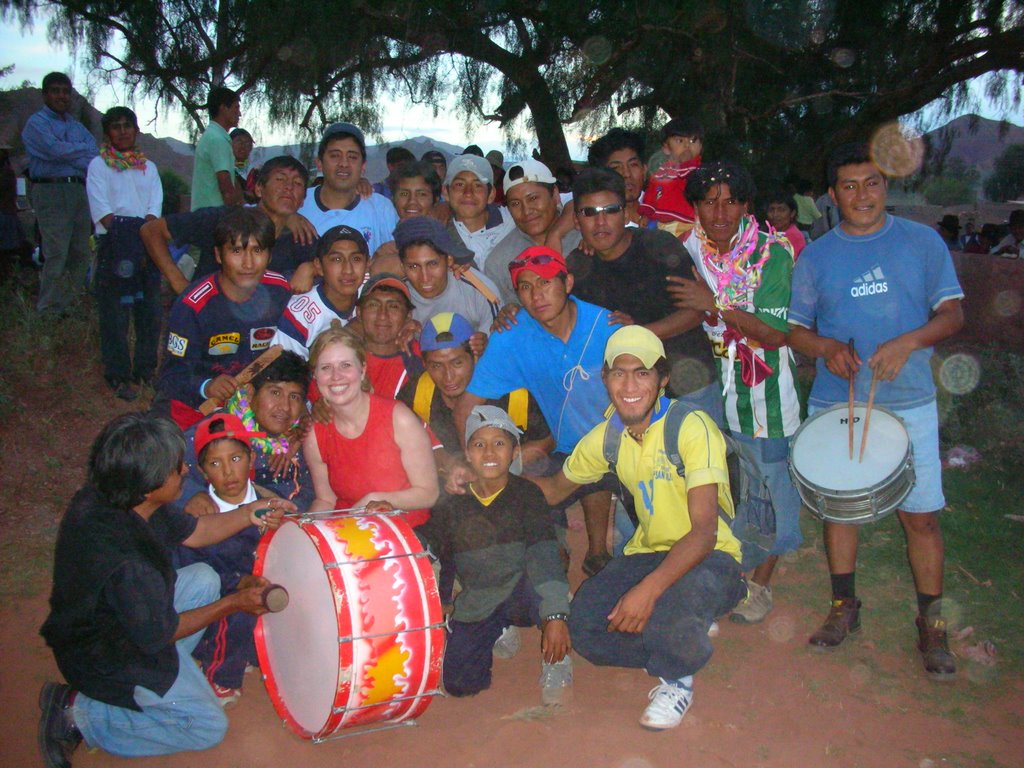
The people here are extremely friendly. For example, on my first day in Bolivia, I hiked to the large Christ statue that overlooks the city. As I was walking back from this hike, I heard loud music coming from the other side of town. I followed the music to a large grassy area where people were gathered around a band. It was a festival. The music was so interesting. The whimsical wooden pipes were paired with a drumbeat that sounded like a tribal war dance. The band didn´t seem to have any set members. People joined and left as the music progressed. All the people watching the band were covered in colorful streamers. I was taking pictures of the band and the onlookers, when the band stopped and insisted that I play with them.

Now anyone who knows me, knows that the only instrument I know how to play is the radio. And Rod jokes that I don´t even play that well. I tried to explain this to them, but that didn´t seem to matter. Finally, after declining repeatedly, they settled for dancing. The dancing too was interesting. Two people link arms and start half-stomp half-prance in a circle around the band. There were about ten couples doing this while I was there. Then, for no apparent reason, one couple yells, ¨Da a vuelta¨and everyone turns around and stomps in the other direction.